JAFIE held Symposium on the State and Future of Sino - U.S. Economic and Trade Relations
Nov 08, 2021
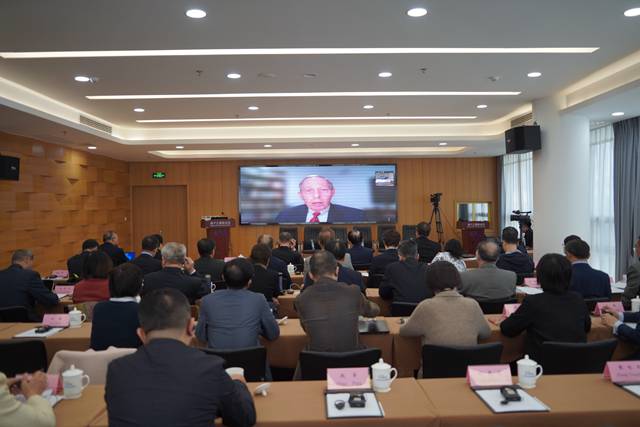
On October 22nd, 2021, Jiangsu Association for Friendship and InternationalExchanges (JAFIE) and AmCham Shanghai jointly held “Yangtze River International Forum: 2021Symposium on the State and Future of China-U.S. Economic and Trade Relations”in the conference hall of JAFIE.
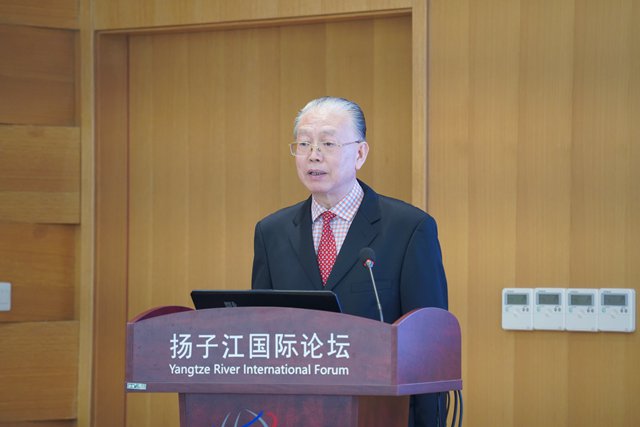
Teng Yong, Senior Vice Chairman of JAFIE, presided over and addressed the symposium.
Ker Gibbs, Chairman of AmCham Shanghai,delivered the keynote speech.Ken Jarret, Senior Advisor of Albright Stonebridge Group and former Chairman of AmCham Shanghai,andMatthew Margulies, Vice Chairmanof the US-China Business Council (USCBC), addressedand delivered keynote speech via video connection respectively.
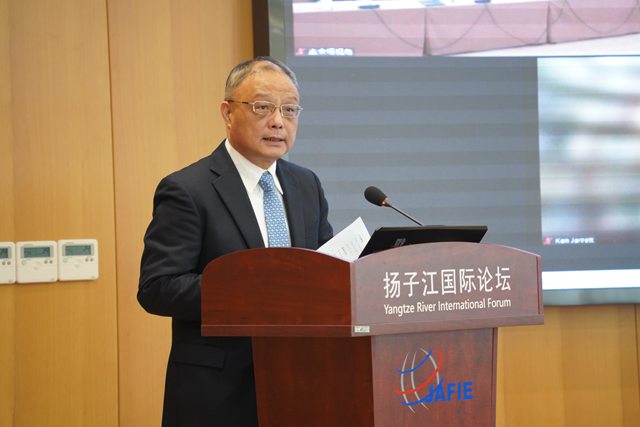
Zhu Feng, Executive Director of JAFIE, Professor and Dean of Institute ofInternational Relations of Nanjing University, was invited to serve as theacademic host of this symposium.
The meeting, held both online and offline, has invitedexperts and scholars in the field of economy and trade, businessrepresentatives, senior executives of professional institutions and governmentofficials from China and the U.S. to conduct dialogues and exchanges onspecific topics, such as “the trend of U.S. economic and trade policy towardsChina”, “the analysis of factors affecting Sino-U.S. economic and traderelations” etc.
Teng Yong, Senior Vice Chairman of JAFIE, pointedout in his speech that the relationship between China and the U.S. has suffered froma serious regression in recent years and the Sino-U.S. economic and traderelations, beset by difficulties and troubles arising from trade friction andCOVID-19, are also undergoing the most difficult period since the establishmentof diplomatic relations more than four decades ago. However, even under such abackground, the Sino-U.S. economic and trade relations have still been stronglyinterdependent and complementary, with a huge potential for cooperation overthe past years. According to the statistics of China Customs, the trade betweenthe U.S. and China increased by 40% year on year in the first seven months of2021, and that of the whole year was expected to be 10% higher than theall-time high in 2018. Meanwhile, China’s full-year exports to the U.S. wouldalso significantly exceed the all-time high in 2018. Jiangsu Province, as amajor province of economy and foreign trade in China, is also a major provinceof trade cooperation with the U.S. The statistics of Nanjing Customs indicatedthat from January to August in 2021, the imports and exports of Jiangsu to theU.S., which have increased by 13.2%, continued to lead all the provinces inChina’s trade with the U.S.
Senior Vice Chairman Teng Yong also said that China-U.S.economic and trade relations are mutually beneficial in essence. Without beingbeneficial to both sides, it would be inexplicable for China and the U.S. toremain strong and resilient relations in economy and trade under such difficultconditions. If only one side benefits and the other side does not, the businesswould go nowhere and the economic and trade relations would also beunsustainable. Hence, the Sino-U.S. relations are proved to be beneficial toboth sides. By holding this symposium, JAFIE aimed to build a dialogue andcommunication platform for the experts, scholars, entrepreneurs and persons ofprofessional institutions from both China and the U.S., as well as people fromall walks of life who care about the economic and trade relationship betweenChina and the U.S.. Through jointly reviewing the past development of Sino-U.S.economic and trade relations and looking into the future, efforts should bemade to explore new ideas and approaches for promotion of the bilateral tradeand investment cooperation between China and the U.S., give play to the role ofthe Sino-U.S. economic and trade relations as an “anchor” and “propeller” inthe relationship between China and the U.S., and actively seek freshopportunities and projects of economic and trade cooperation between thebusiness circles and local governments of Jiangsu and the U.S.. By holding this symposium which answer questionsand provide support for Jiangsu enterprises to go to the U.S. and Americanenterprises to carry out economic and trade cooperation in Jiangsu, JAFIE wouldbe devoted to playing a positive role in the development of economic and tradecooperation between Jiangsu and even China with the U.S.
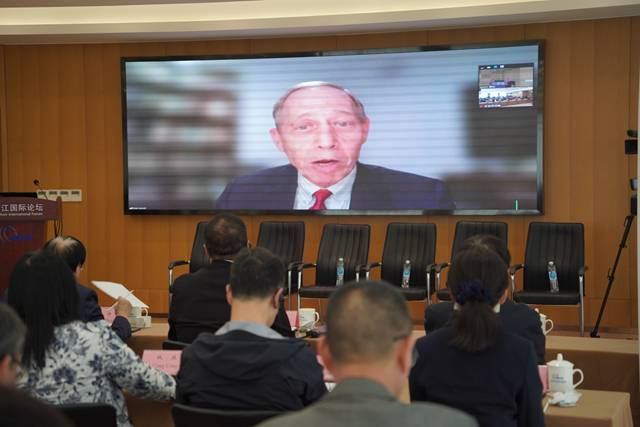
Ken Jarret, Senior Advisor of Albright Stonebridge Group andformer Chairman of AmCham Shanghai, addressedthe conference via video connection.
Henotified that with the 13thlargest economic volume worldwide,Jiangsu Province is a province of vital significance in China-U.S. economic andtrade relations and also the province with the highest concentration of the U.S.investment in China, featuring strong business ties with the U.S.. This hasfully demonstrated the success of Jiangsu in creating a favorable businessenvironment. In the current context, there are strong doubts from both sidesabout the value of the economic and trade cooperation between China and theU.S., claiming that the bilateral relations are increasingly competitive andeven adversarial. He believed that the China-U.S. economic and trade relationshave always been a crucial pillar in the relationship between the two countriesand served as a buffer during the period of stress. Besides, he also remindedthe political leaders that political tensions or differences can causeunacceptable economic costs. This is still true today, perhaps more so than ever.When talking about economic decoupling, people tend to ignore the fact that thetwo economies have been highly interdependent. Such an interdependencebenefited both countries, but admittedly, it also came at a cost sometimes. Thecurrent challenge is to manage this new and more complicated businessenvironment where the amplified fear would threaten a multitude of benefits ofeconomic interaction, as well as the U.S investment in China and the Chineseinvestment in the U.S. He still insisted that the two countries would benefitfrom the solid business relationship. In doing so, he has devoted years of hiscareer to this goal and will continue to do so. Especially under the currentenvironment, people cannot rest on the past laurels and successes, and there isstill a lot of work to be done. Most importantly, it must be kept in mind thateconomic actives are one of the major ways of bilateral non-governmentinteraction. It is often believed that the China-U.S. relationship is definedby the meetings between the leaders and senior staff of the two countries.Nevertheless, in reality, the most common interaction are conducted betweenpeople and people, specifically people’s interaction in business, education,culture, sports and other fields. In this case, local governments and businessgroups will play a vital role. There is a chance for people to comprehensivelyimprove the tone of the Sino-U.S. relationship, which is not an easy task but acritical one. Therefore, this symposium is expected to help make some progresstowards this goal.
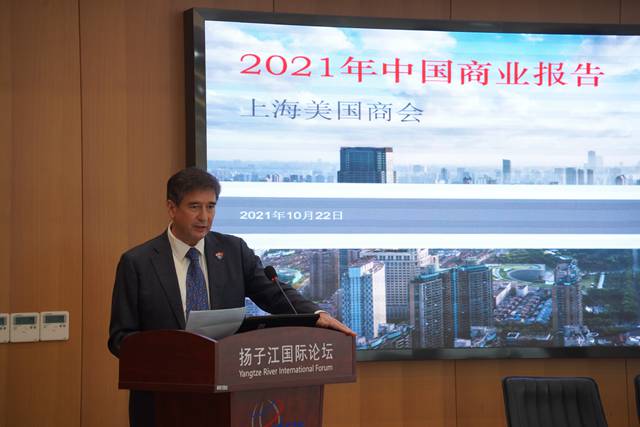
KerGibbs, Chairman of AmCham Shanghai,first thanked JAFIE for the invitation in his keynote speech and then explainedthat AmCham Shanghai is initiating a series of dialogues with Washington D.C.,so as to communicate with the officials of the Department of Commerce, theWhite House and the National Security Council of the U.S. on relevant issues.
ChairmanKer Gibbs introduced that AmCham Shanghai has four independent chambers ofcommerce in Beijing, Shanghai, Guangzhou and Chengdu, among which AmChamShanghai is the largest with more than 3,000 Chinese and American members. Eachyear, the Chamber will organize delegations to the White House and Congress ofthe U.S. to convey and explain the positive side of American enterprises inChina and what’s happening. The annualsurvey report released by the chamber will investigate the local businessenvironment, existing problems and major feedback. This year’s survey startedfrom July and the survey report was issued in September. According to thesurvey results, business activities are rebounding and recovering from theimpact of COVID-19 and Sino-U.S. trade friction. The overall performance ofenterprises this year is almost the same as that of last year and the yearbefore. The annual revenue of 80.2% of the respondents is expected to increasecompared with 2020. Some sectors continued to be weak, such as the industriesof aviation, entertainment etc., while some grew reversely, including theretail industry of some luxury goods. Facing the impact of COVID-19, the hotelindustry has maintained its overall operating performance by turning to thehuge local market in a timely manner and following the development trend ofdomestic and international dual circulation of the Chinese economy. In terms ofinvestment, over 60% of the member units said they would increase theirinvestment in China in 2021, basically the investment level before the tradefriction between China and the U.S.. When investigating the enterprises’optimism about the market, the Chamber asked the same question in the samemanner every year as a comparison. This year, 78% of members said they feltvery optimistic about the fundamentals of the economy in the next five years,which is also roughly back to the historical average. When it comes to theobservation and treatment of the importance of the Chinese market, 55% membersranked China in the top three important places of investment, 27% membersregarded China as a preferred place for investment and even better than theU.S., and 42% retailers would make China a top priority for investment. Therehave indeed been a lot of discussions among member units about diversificationof production sites, adjustment of the supply chain, economic decoupling,tariff measures and other problems, but survey results suggested that 70% ofmember units would not move manufacturing operations from China to othercountries in next three years. Someenterprises have moved production bases from China to Southeast Asia, India orMexico, rather than back to the U.S.. The products made in China by most of theforeign-invested enterprises, including U.S.-funded enterprises, are mainly tosatisfy the Chinese local market, so the impact of this kind of decoupling andtariff measure was actually no big deal. It was mainly themicroelectronic industry that adjusted the supply chain. The surveyresults showed that the executives at the headquarters of multinationalenterprises mainly had two uncontroversial concerns about the Chinese market,that is, the rising cost of domestic labor and the increasingly competitivelocal enterprises, both of which have intensified the operating pressure ofenterprises. In fact, the current market competition environment hasbeen different from that of the early years when the U.S. enterprises coming toChina with products and technologies could dominate the market. There were twomain, controversial concerns among the senior management of multinationalenterprises about the Chinese market. One was the change in the relationshipbetween the U.S. and China. 76.4% of the respondents expressed their intentionto re-balance the businesses in China. Instead of quitting the market orshutting down the factories here, they would adjust the enterprises’ sources ofrevenues and profits, so as not to be over dependent on the Chinese market. Theother concern was the boycott of American products caused by the publicpatriotism. The customer-oriented senior management, such as the executives incharge of operational management in the retail industry, were particularlysensitive about this issue. Notably, 30% of the respondents from the retailindustry had such a concern.
ChairmanKer Gibbs said that purely from the perspective of business, all commercialactivities are for employment. Hence, it was hoped to promote employment in theU.S. by doing business in China, developing the economic and trade relationswith China and improving the business operations in the Chinese market.
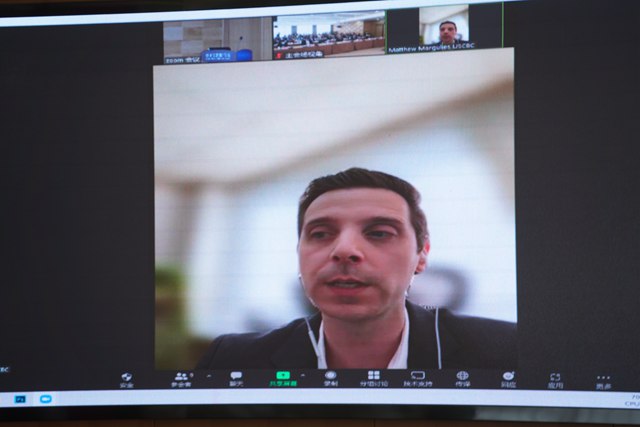
Matthew Margulies, Vice Chairman of USCBC,delivered a keynote speech via video connection. He said, from the perspectiveof USCBC, the U.S.-China relationship, as the world’s most important bilateralrelationship, not only affected China and the U.S. significantly, but alsoinfluenced the region and the world as a whole. There were not only political,geopolitical and military hot issues between the U.S. and China, but alsochallenges and opportunities in commerce, economy and other fields. It was ineveryone’s interest to prioritize and manage major issues in the bilateralrelations and minimize the outbreak risk of hot issues to the greatest extent.
Vice Chairman MatthewMargulies stated that the Biden administration has been in office for nearlynine months, but the bilateral relationship between the U.S. and China wasstill as a standstill, indicating that the two governments haven’t found theway to get along yet. So far, the Biden administration has made it clear thatdespite its competitive relationship with China, it would also cooperate withChina. Meanwhile, it has clarified several different objectives, yet withoutany concrete plans to achieve them. Over the past nine months, there have beenphone calls between the heads and meetings between the senior governmentauthorities of the U.S. and China. In the meantime, at the working level, thetrade teams of the two sides have discussed the implementation of the firstphase of the trade agreement which was signed last year on a regular basis. DaiQi, a representative of the U.S. trade, has made an important speech on theChina-U.S. trade in early October, yet without further clarification on how theadministration viewed and prioritized the trade relations with China andwhether it was interested in advancing the trade talks with China in thefuture. The U.S. Ministry of Foreign Affairs said the U.S. would compete andcooperate with China, while challenging China as appropriate. On realizing theclimate goals, Kerry, former Secretary of State, created a parallel frontierfor the U.S-China engagement. Gina Raimondo, Secretary of Commerce, expressedclearly the wish to cooperate with China and help the U.S enterprises to sellproducts to China. The general impression was that the U.S. administrationlacked a clear guide to the development of the U.S.-China relations, making itdifficult for the Chinese government to further determine the handling of thebilateral relationship. Of course, sometimes foreign investors might be caughtunprepared by some domestic regulations introduced by the Chinese government, thusforming the chilling effect, which posed a dilemma forproponents of developing the bilateral relations between the two countries.
Vice Chairman MatthewMargulies commented that in spite of the currently unclear future of theU.S.-China engagement, USCBC would continue todeliver consistent messages of maintaining good relations to both the U.S. andChinese governments. For the U.S. enterprises, in the face of China’sremarkable progress in innovation and technology, the key to promoting theirown global competitiveness lied in seeking a place in China, so as to securetheir position in the global market.
In terms of the dialoguesand exchanges between China and the U.S., Vice Chairman Matthew Marguliesbelieved that the previous large-scale communication and exchanges between theU.S. and Chinese governments with a luxury lineup of more than 40 cars at atime might have gone forever, and it’s time to focus on and address specificproblems, promote the achievement-oriented dialogues and exchanges, and realizeeffective compromises through the bilateral or multi-lateral mechanisms. Thismight be a time-consuming process, but at least we had to make a start and thenwork in that direction. USCBC would be devoted topushing the China-U.S. relations towards a better direction and promoting thetrade cooperation and economic development between the two countries.
As for theoutlook on the future Sino-U.S. economic and trade relations and thedevelopment of the U.S. enterprises in China etc., Vice Chairman Matthew Margulies echoed the views of his American colleagueswho spoke earlier.
The three U.S. guests alsoexpressed in their speeches the expectation that China could continue toimprove the business environment to ensure fair competition betweenforeign-owned enterprises and local enterprises, take into consideration theconsistency and transparency of policies when launching new policies, andprovide more convenience for the departure, entry, work and life of the seniorexecutives as well as their relatives of foreign-owned enterprises and thetraining personnel of both China and the U.S. while implementing the preventionand control measures against COVID-19.
The symposium was attendedby more than 70 people, including heads of relevant provincial and municipaldepartments, partial directors of JAFIE, related experts and scholars,representatives of financial, law and business circles etc. Besides, indicatedby the back-end terminal statistics, the online participants from both Chinaand the U.S. exceeded 1,100.
The guests who participatedin the discussion at the symposium included: Peter L.Q. Pan, Chairman and CEOof CHERVON, Xu Weizheng, Founder and CEO of Suzhou Kangrun Pharmaceuticals,Inc., Henry Chen, Senior Partner of Dentons (Shanghai) and Expert of ChinaNational Enterprise Compliance Committee, Mao Yaohong, General Manager of STDL,and Chen Lan, Research Partner of Deloitte, Prof. Zhu Feng, Dean of Instituteof International Relations of Nanjing University, presided over the spotdiscussion.
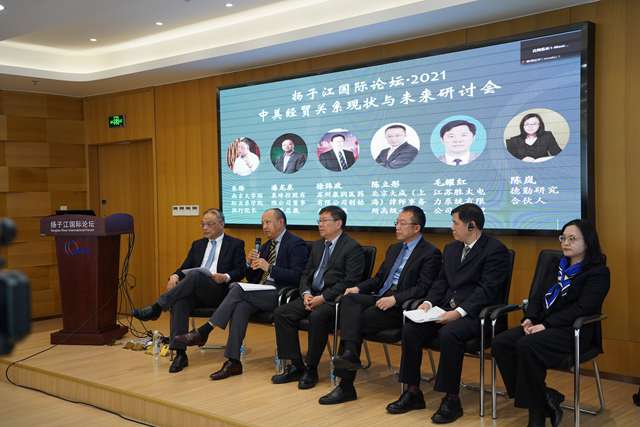
The guests respectively introducedtheir own business features, development history, and the experience, lessonsand insights of exploring and expanding the international market, especiallythe new ideas for enterprises to respond to the impact of global pandemic andfollow the new situation of domestic and international dual circulation. Inaddition, they also held a heated discussion over the theme of this symposiumand relevant issues, and interacted with the online and offline participantstogether with Ker Gibbs, Chairman of AmChamShanghai.
(end)
(Note:personal remarks in this article havebeen abridged without review by them personally. This website published butdoes not necessarily endorse the personal views expressed in this article.)